From Conversation to Action: Manufacturing Leaders Explore WOrkforce Solutions for Greater Green Bay

Written by: Lara Fritts | President & CEO, Greater Green Bay Chamber

Building on insights from the Greater Green Bay Chamber’s CEO Circle, local manufacturers came together during Manufacturing Month to identify practical solutions to workforce challenges and strengthen the region’s manufacturing competitiveness.

Manufacturing has long been a cornerstone of Greater Green Bay’s economy. As the industry continues to evolve, so do the challenges and opportunities facing local employers.

During a recent Greater Green Bay Chamber CEO Circle, business leaders identified several issues affecting the manufacturing sector, including workforce availability, the approaching wave of retirements often referred to as the “silver tsunami,” artificial intelligence, and transportation.

Recognizing the importance of digging deeper into these challenges, the Chamber convened its first manufacturing-focused follow-up roundtable, as part of Celebrating Manufacturing Month, to move beyond identifying issues and begin exploring solutions.

The discussion, supported by UnitedHealthcare, the event’s presenting sponsor, represented by David Bishop, brought together manufacturing leaders to share their experiences, identify common needs, and explore opportunities for collaboration.

The conversation centered on a critical question: How can Greater Green Bay better develop, retain, and connect the talent needed to support manufacturing growth?

Bridging the Skills Gap

One of the most significant challenges identified was the growing need for skilled technical workers, particularly those filling positions between entry-level production roles and engineering.  Manufacturers highlighted the difficulty of finding maintenance technicians, process technicians, machinists, and individuals interested in advancing their careers within manufacturing.

Some employers are addressing this challenge by investing in short-term certification programs that help existing employees develop new skills. However, participants questioned whether these certifications consistently connect to longer-term educational credentials and career advancement opportunities.

The discussion also highlighted concerns about declining enrollment in machining programs and inconsistent access to career and technical education across area high schools. While area high school were recognized for their efforts to introduce students to manufacturing careers, participants emphasized the need for broader opportunities throughout the region.

Equally important is changing the perception of manufacturing. Today’s manufacturing facilities are increasingly automated, technology-driven, and filled with opportunities in programming, robotics, engineering, and advanced production.

As one participant observed, “This is not your mom and dad’s manufacturing plant.”

Manufacturing leaders agreed that students, parents, teachers, and career counselors need greater exposure to these environments and a better understanding of the rewarding, high-wage careers available.

The Silver Tsunami: Turning Retirement Into Opportunity

Another major concern was the anticipated retirement of experienced manufacturing workers and the potential loss of decades of institutional knowledge.  Participants shared that many longtime employees developed their expertise through hands-on experience, making that knowledge difficult to document or transfer.

Several manufacturers described creative approaches to retaining this expertise, including employing semi-retired workers as part-time mentors and trainers. One manufacturing representative shared that they allow a retired employee to work three days a week – for three hours a day, recognizing the value they bring to the team, even for that short time. This approach is proving beneficial for the transfer of knowledge, increased morale and a smooth transition or work. 

Building on these examples, participants explored the concept of a “Golden Internship” program that would connect retired or near-retirement professionals with manufacturers seeking technical expertise, mentorship, and workforce training support.

The idea received strong interest from the group and could provide a valuable opportunity to retain institutional knowledge while creating flexible employment opportunities for experienced workers.

Connecting Education and Industry

A recurring theme throughout the conversation was the importance of helping students and families better understand manufacturing career opportunities.

Participants questioned whether students who do not plan to pursue a traditional four-year degree are receiving sufficient exposure to manufacturing careers and whether parents and educators understand the earning potential and advancement opportunities available.

One idea that generated significant support was organizing manufacturing facility tours for students, parents, teachers, and career counselors. Participants also recommended developing clear, easy-to-understand career pathway resources that demonstrate how someone can enter manufacturing, build technical skills, earn additional credentials, and advance into higher-paying positions.

These opportunities align directly with the work of the Chamber’s Partners in Education (PIE) Board, which brings education and business leaders together to strengthen connections between classroom learning and workforce needs.

The insights from the roundtable will help inform continued discussions around career pathways, employer engagement, and opportunities to strengthen the region’s talent pipeline.

Three Opportunities for Action

Building on the original CEO Circle discussion and the insights shared by manufacturing leaders, three potential initiatives emerged:

  • Manufacturing Career Pathway Mapping: Create accessible resources illustrating manufacturing occupations, required skills and credentials, career progression, and salary opportunities to help students, parents, educators, and employees make informed career decisions.
  • Golden Internships: Explore a program connecting retired and near-retirement manufacturing professionals with businesses seeking experienced mentors, trainers, and specialized technical expertise.
  • Manufacturing Discovery Tours: Develop opportunities for students, parents, and educators to experience modern manufacturing firsthand, supported by information about available careers and advancement opportunities.

These ideas represent potential next steps for the Chamber, the PIE Board, and its partners to evaluate, refine, and advance.

Continuing the Conversation, Advancing Solutions

Greater Green Bay’s manufacturing strength has been built over generations through innovation, investment, and a skilled workforce. Maintaining that competitive advantage will require new approaches to workforce development, stronger connections between industry and education, and creative strategies to retain valuable experience.

The original CEO Circle helped identify the challenges. This manufacturing-focused follow-up roundtable provided an opportunity to better understand those challenges and begin identifying practical responses.

For the Greater Green Bay Chamber, the value of these conversations is not simply bringing business leaders together. It is using what we learn to identify opportunities, connect the right partners, and turn ideas into meaningful action.

Thank you to David Bishop and UnitedHealthcare for their support of Celebrating Manufacturing Month and to the manufacturing leaders who contributed their time, insights, and ideas.

Together, we are helping position Greater Green Bay as a place where manufacturers can continue to invest, innovate, and grow.

What Greater Green Bay Manufacutring CEOs Are Saying About the Workforce of the Future

Written by: Lara Fritts | President & CEO, Greater Green Bay Chamber

When CEOs and senior leaders from across Greater Green Bay came together, the conversation quickly moved beyond today’s job openings. The bigger question became: What will it take to build the workforce our region needs five, ten and twenty years from now?

This was the question at the center of a recent Greater Green Bay Chamber CEO Circles conversation. Leaders discussed everything from skilled talent and artificial intelligence to housing, transportation and the changing expectations of younger professionals.

What emerged was a picture of a labor market undergoing significant change and a strong sense that talent development can no longer be separated from economic growth.

The demand for skilled labor continues to be significant. Employers identified welders, electricians, mechanical talent and machine operators among their most difficult positions to fill.

Companies are responding by investing more heavily in apprenticeships, internal training and upskilling existing employees rather than waiting for fully trained workers to enter the market. Participants also expressed positive sentiment about training opportunities available through NEWMA and the value of industry collaboration.

Competition for skilled workers increasingly extends beyond Greater Green Bay. Data center development elsewhere in Wisconsin, for example, is creating additional demand for electricians and putting pressure on an already constrained talent pool.  But technical proficiency is only part of what employers need.

Two skills gaps were mentioned repeatedly: Math and critical thinking. As manufacturing becomes increasingly automated and technology-driven, employees need the ability to understand systems, solve problems and adapt; not simply perform a single technical task.

One of the significant concerns expressed by leaders was the approaching retirement of long-tenured employees.  These individuals often possess decades of institutional knowledge that isn’t written in an operating manual. When they leave, companies aren’t simply losing an employee. They may lose relationships, processes, historical knowledge and expertise developed over years.

That makes succession planning and knowledge transfer increasingly important. Businesses need to begin these conversations well before a retirement announcement.

The same principle applies at the ownership level. With many companies operating multiple businesses under a broader organizational umbrella, succession can become increasingly complex. Helping business owners think earlier about leadership transitions, ownership structures and continuity will be important to preserving strong companies and local decision-making in Greater Green Bay.

The conversation also touched on the changing ownership landscape, including private equity investment and what it can mean when company leadership and decision-making are located outside the region.

Leaders also discussed a noticeable shift in how younger employees approach their careers.  The traditional expectation that someone might spend decades with one employer is increasingly uncommon. Participants described seeing younger professionals remain with companies for roughly three to five years before looking for their next opportunity.

There was also discussion about employees pursuing advancement and titles more quickly than previous generations.  Perhaps more importantly, employers are seeing a shift in what workers value.

Traditional benefits built around long-term employment, and retirement may not carry the same weight they once did. Benefits that give employees more time back such as flexibility, vacation and other forms of time off can be particularly attractive.

These expectations create a new challenge for employers: Forgoing the traditional employment relationship from the past and retaining ambitious young professionals while also giving them meaningful opportunities to grow while meeting their expectations as an employee.

If Greater Green Bay wants more young people to pursue careers in manufacturing, construction, healthcare, technology and the skilled trades, waiting until their senior year of high school is too late.  Career awareness needs to begin earlier.

That is one reason the Chamber’s Find Your Inspiration (FYI) event is so important. By reaching students in eighth grade, before they enter high school, we can introduce them to careers available in Greater Green Bay for which they may never have considered. This serves to help them understand how the choices they make in high school directly connects to their future opportunities.

Employers have an important role to play in that process. Students need to see modern workplaces, meet people doing the work and understand that today’s manufacturing environment may involve robotics, automation, data, engineering and sophisticated technology, alongside traditional skilled trades.

Building the future workforce starts by helping young people see themselves in these careers.

Recruiting someone to a company means recruiting them to a community. Housing remains a significant concern, particularly the availability and cost of homes for young professionals. Employers may successfully recruit someone to Greater Green Bay only to have that person struggle to find a home that fits their needs and budget.

This makes increasing housing supply and finding ways to accelerate residential development an economic competitiveness issue.  At the same time, Greater Green Bay must continue strengthening its “cool factor.” We need to build a community where talented people don’t simply accept a job, but actively want to live and build their lives.

Entertainment, amenities, neighborhoods, outdoor recreation, cultural experiences and opportunities to connect with other professionals all play an important role. The Chamber’s talent attraction and retention work will continue to focus beyond simply bringing people to the region, to giving them reasons to want to stay.

For some employers, freight transportation is a particular challenge. Greater Green Bay can function as an endpoint for trucking routes, making it difficult in some cases to secure full return loads and creating inefficiencies for companies moving products. But transportation is also a workforce issue.

There was significant interest in better understanding how public transportation could connect employees with major employment centers, particularly for workers who may not have reliable access to a vehicle.  As Greater Green Bay grows, the connection between where people live and where they work will become increasingly important.

The discussion ended by looking ahead and artificial intelligence was an appropriate place to finish.

For our business leaders, AI is no longer simply an emerging technology to watch. Companies are beginning to explore practical applications that can improve everyday operations.

Examples shared included automating repetitive processes, training employees, building AI agents to answer frequently asked questions and using AI to identify trends and insights within ERP data.

The opportunity isn’t simply to replace tasks. It is to give employees better tools, improve productivity and allow people to spend more time on work requiring judgment, creativity and problem-solving.

The jobs may change. The technology certainly will. But Greater Green Bay’s competitive advantage will continue to depend on people who can think critically, solve problems, learn new skills and adapt to the evolving global economy.

The key take-away from the CEO Circles conversation was how interconnected these opportunities for our community have become.

Workforce is about education and career awareness. It is about apprenticeships and upskilling. It is about succession planning and knowledge transfer. It is about housing, transportation and quality of place. And increasingly, it is about helping businesses and employees adapt to rapidly changing technology.

There isn’t one program or organization that can solve all of these challenges.  But there is tremendous opportunity when employers, educators, municipalities and community partners work together.  The Chamber’s role is to continue bringing those voices together, listening closely to what businesses are experiencing and turning those conversations into action that produces measurable results. Because building the workforce of the future isn’t simply about filling today’s open positions.  It’s about making Greater Green Bay a place where businesses can grow, people can build meaningful careers, and the next generation wants to stay.

Chamber Membership

VINNY PODUVAL: “GREATER FOR YOU.”

Greater Green Bay Chamber membership fuels growth, talent and impact.

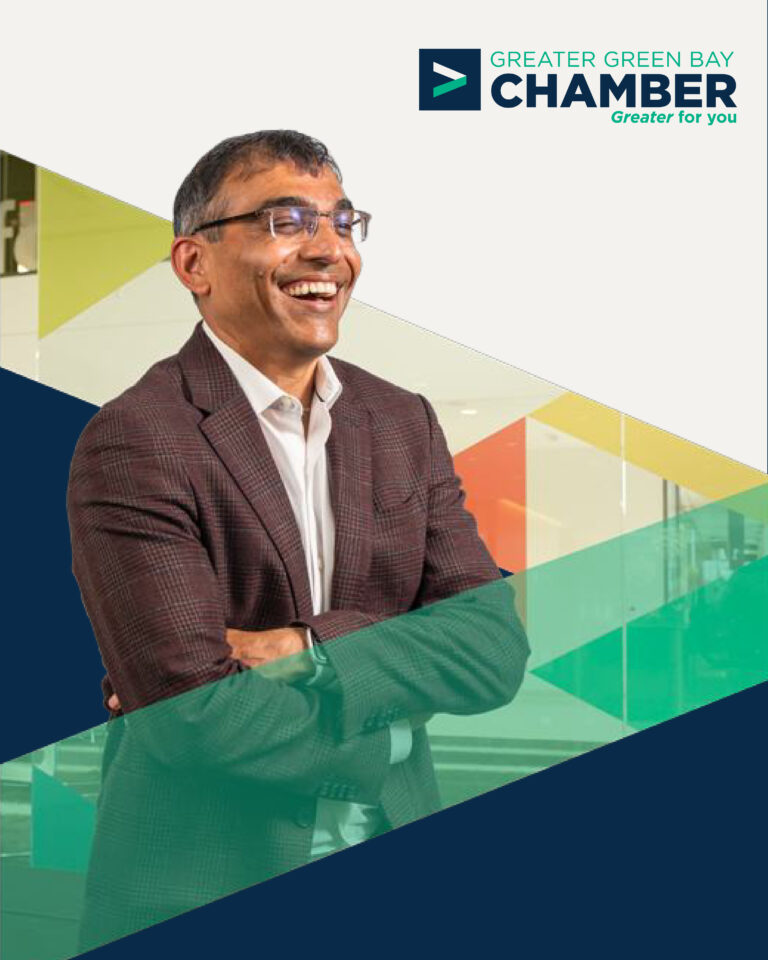
Vinny Poduval first engaged with the Greater Green Bay Chamber as part of a broader effort to better understand the community he had come to call home. After moving to the area in 2012, he saw an opportunity to deepen that connection through his work with Schreiber Foods.

“There was an opportunity to join, and I thought this was a great way for me to understand more about the community, what it has to offer, and better understand how Schreiber and the Chamber can partner together,” said Poduval.

A former member of the Greater Green Bay Chamber Board of Directors and Executive Committee, Poduval has had a front-row seat to the organization’s impact, and he sees a strong alignment between its mission and that of Schreiber Foods: “When I think about organizations that have missions that are just so in sync, at Schreiber, our strategic priorities are on growth and impact.”

That alignment is especially evident in one critical area: talent.

“We know that if Schreiber needs to grow, then we have to invest in talent,” Poduval said. “And that is probably one of the biggest areas that we have partnered with the Chamber in our ability to attract talent to the area, help retain that talent and then provide them growth opportunities.”

Through a variety of Greater Green Bay Chamber programs and initiatives, Schreiber Foods has embedded itself deeply in the ecosystem. Leaders across the organization are engaged in task forces and programs like Leadership Green Bay and Chamber Young Professionals.

“The list goes on and on in terms of the ability to use all the offerings that the Chamber has for talent attraction, retention and development,” he said. “For example, we have used the Community Concierge Program to attract top talent to this area. You sell the company, the Chamber sells the community.”

Beyond talent, Poduval points to the Greater Green Bay Chamber’s economic development work as another area of meaningful collaboration. He says the Chamber’s impact extends beyond the professional.

“Green Bay has actually become home,” he said. “What the Chamber has allowed me to do is create a network, both professionally and personally, and it’s helped my family truly make this their home.”

When it comes to value, Poduval is clear. “The return on investment of Chamber membership might not be easily measured in dollar and cents,” he said. “But the impact long term is just so amazing that I would call that priceless.”

So what’s been greater for Poduval? “The Chamber has just enriched my life in so many different ways. Our job is to think about, ‘How do we leave tomorrow to be a better version than what we are today?’ and the Chamber helps us do that.”

Greater Green Bay Chamber Names Cole Buergi Vice President of Marketing and Member ENgagement

The Greater Green Bay Chamber has named Cole Buergi as its new Vice President of Marketing and Member Engagement, strengthening the organization’s work to connect businesses, elevate member stories and advance priorities that support the region’s economic vitality. 

Buergi will begin his new role on July 20, 2026. 

He brings more than 30 years of experience in public relations, business development, stakeholder engagement and strategic communications. Buergi comes to the Chamber from Kane Communications Group, formerly Leonard & Finco Public Relations, where he served as Vice President of Business Development and helped organizations navigate complex communications challenges, build trust and connect with key audiences. 

In his new role, Buergi will help lead the Chamber’s marketing and member engagement strategy, with a focus on strengthening communication with members, highlighting the work of businesses across the region and creating meaningful opportunities for connection. 

“Cole understands both the power of strategic communication and the importance of strong relationships,” said Lara Fritts, President and CEO of the Greater Green Bay Chamber. “His experience, community involvement and long-standing connection to the Chamber make him an excellent fit for this role. As we continue working to support businesses of all sizes and advance regional priorities, Cole will help us better engage our members, tell their stories and connect our business community in ways that move Greater Green Bay forward.” 

Buergi has been involved with the Greater Green Bay Chamber for many years, including service on the Chamber’s Board of Directors, Economic Development Board and Executive Committee. His community involvement has also included service with Habitat for Humanity, the UW-Green Bay Phoenix Fund Board and On Broadway, Inc. 

“The Greater Green Bay Chamber has been an important part of my professional journey,” Buergi said. “Over the years, I’ve had the privilege of serving on committees and the Board of Directors, which has given me a deep appreciation for the Chamber’s role in strengthening our business community. I’m honored to continue contributing to an organization that creates meaningful opportunities for businesses and the region as a whole.” 

Throughout his career, Buergi’s work has included public affairs, crisis management, brand strategy, integrated campaigns and community outreach for major initiatives, including the TransCanada Bison Pipeline Project and the I-39/90 Expansion. He has earned recognition from PRSA Northeast Wisconsin as Communicator of the Year and received the United Way Outstanding Emerging Leader Award. He was also selected as an attendee of the U.S. Army War College National Security Seminar. 

Buergi holds a Master of Business Administration from Lakeland University and a bachelor’s degree from the University of Wisconsin-Green Bay. 

“What excites me most is the opportunity to help shape the future of our business community,” Buergi said. “The Chamber plays an important role in supporting businesses of all sizes, developing talent and advancing regional priorities. I’m looking forward to contributing to that mission and helping create opportunities for our members and our community.” 

The Greater Green Bay Chamber is greater for you. Since 1882, we have supported member businesses through economic development, workforce growth and community leadership that drives real impact. Discover how we can support you at greatergbc.org or call 920-593-3400.

Greater Green Bay Chamber Brings Free AI Training to Small Businesses in Greater Green Bay

The Greater Green Bay Chamber is partnering with the U.S. Chamber of Commerce Foundation to bring Small Business B(AI)sics to Greater Green Bay. Small Business B(AI)sics is a national initiative from the U.S. Chamber of Commerce Foundation and the U.S. Chamber of Commerce, with support from Google, that aims to equip small businesses with practical AI skills. 
 
AI adoption among small businesses has more than doubled since 2023. Entrepreneurs using AI report saving time, improving customer service, and unlocking new growth opportunities. Small Business B(AI)sics aims to train 40,000 U.S. entrepreneurs over the next three years through a mix of in-person workshops and digital learning resources. 
 
“Supporting small business growth is at the core of everything we do,” said Beth Jones Schnese, vice president of marketing and member engagement at the Greater Green Bay Chamber.  “We’re proud to be the only Chamber in Wisconsin offering this training — putting practical, no-cost AI tools directly in the hands of local entrepreneurs so they can compete and thrive right here in Greater Green Bay.” 
 
“Small businesses are the heartbeat of our communities,” said Marc DeCourcey, senior vice president at the U.S. Chamber Foundation. “We’re proud to partner with the Greater Green Bay Chamber to bring practical, no cost- AI training to local entrepreneurs and helping them innovate, compete, and thrive.” 
 
What attendees will learn: 

  • Build a strong foundation: From data protection to ethical AI use, learn AI basics and best practices. 
  • Save time and boost efficiency: Discover AI tools that work with platforms you already use. 
  • Improve what’s working: Use AI to analyze your business and identify growth opportunities. 
  • Get actionable steps: Walk away with a plan to implement AI in your business immediately. 
     

The first training will be held in-person at Northeast Wisconsin Technical College Corporate Training Center, 2740 W. Mason Street, Green Bay, WI 54307, on July 22nd from 9:30 a.m. to 11:30 a.m. Space is limited to 75 attendees per session. Small businesses (less than 500 employees) and entrepreneurs can sign up on the Greater Green Bay Chamber website: https://www.greatergbc.org/event/small-business-baisics/ 
 
For questions or additional information, contact Annika Osell at aosell@greatergbc.org. 

Chamber Membership

ROBYN DAVIS: “GREATER GROWTH.”

Greater Green Bay Chamber membership fuels growth, talent and impact.

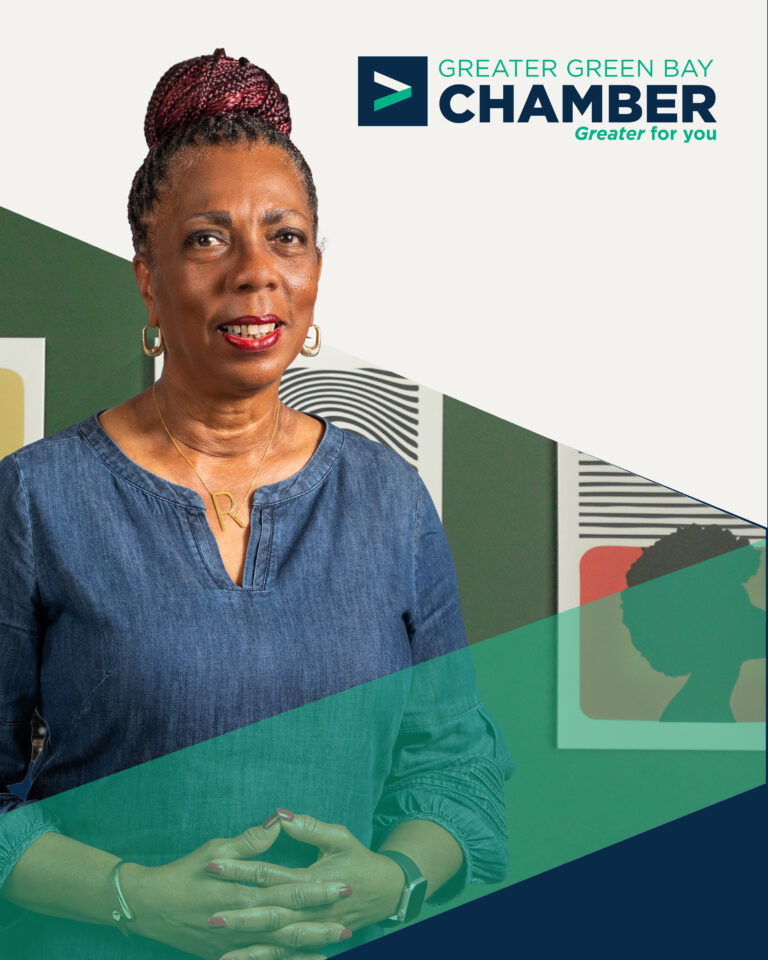
Robyn Davis first connected with the Greater Green Bay Chamber while serving as president of Freedom House Ministries when she was invited to participate in focus groups shaping the Greater Green Bay Chamber Economic Development Strategic Plan.

“That was the first time that I really came together with Chamber members,” she said. “I appreciated the fact that I was being asked to contribute to a community-wide strategy.”

That invitation left a lasting impression. “It meant that the Chamber valued my perspective, valued my insight, and really wanted to include the perspective that I had as a nonprofit CEO in the future of the community,” she said. “And really giving voice to the community that I served at that time. It was families with children experiencing homelessness.”

As her career evolved into her current role as president and CEO of Brown County United Way, Davis found that early connection became foundational. She points to a partnership that brings together business, nonprofits, government and education to tackle shared challenges.

After contributing to the strategic plan, Davis was asked to lead the Chamber’s Diversity, Equity & Inclusiveness Task Force.

“That brought me to the table again in a greater way with business leaders, the government, etc.,” she said. “Being placed in that leadership role was a surprise, but really seeing the development of that work was just a natural fit.”

She points to workforce development as one of the most pressing challenges the Greater Green Bay Chamber helps address. “Regardless of whether you’re a business, nonprofit, government agency or higher education, we’re all concerned about where our workforce is coming from,” she said.

Through her work, she has elevated conversations around Asset Limited, Income Constrained, Employed (ALICE) households and economic stability: “How do we work together to stabilize the workforce, and also what do we do to provide those supports as businesses are recruiting?”

Beyond strategy, Davis emphasizes the Greater Green Bay Chamber’s role in building relationships. That connectivity has shaped her growth as a leader. “Coming to the networking events, you really get to create those one-on-one connections with folks,” she said.

Davis engages with the Greater Green Bay Chamber as a nonprofit leader, individual professional and entrepreneur. Across all three roles, one theme stands out: “It’s the visibility,” she said. “It is meaningful to be a member of the Greater Green Bay Chamber. Being a member is very important.”

She also sees the Greater Green Bay Chamber as a tool for team development through programs like Leadership Green Bay and Chamber Young Professionals. “We are always looking for cost effective ways to provide training and networking opportunities,” she said. “As a Chamber member, we have access to lasting relationships.”

So what’s been greater for Davis? “The relationships that come from being a member. It makes you feel part of something greater in the community, a greater sense of personal value.”

Chamber Ambassador Spotlight

MEET PAUL EVANSEN

Chamber Ambassadors represent the Greater Green Bay Chamber in the community and actively engage with members and nonmembers. These dedicated volunteers serve as trusted liaisons, answering questions about membership, promoting local businesses, attending Chamber events and celebrating milestones at ribbon cuttings and groundbreakings.

Every Chamber Ambassador brings a unique story and a personal commitment to making Green Bay a better place to live, work and do business. In this monthly blog series, we introduce the passionate individuals who give their time, energy and enthusiasm to serve our members.

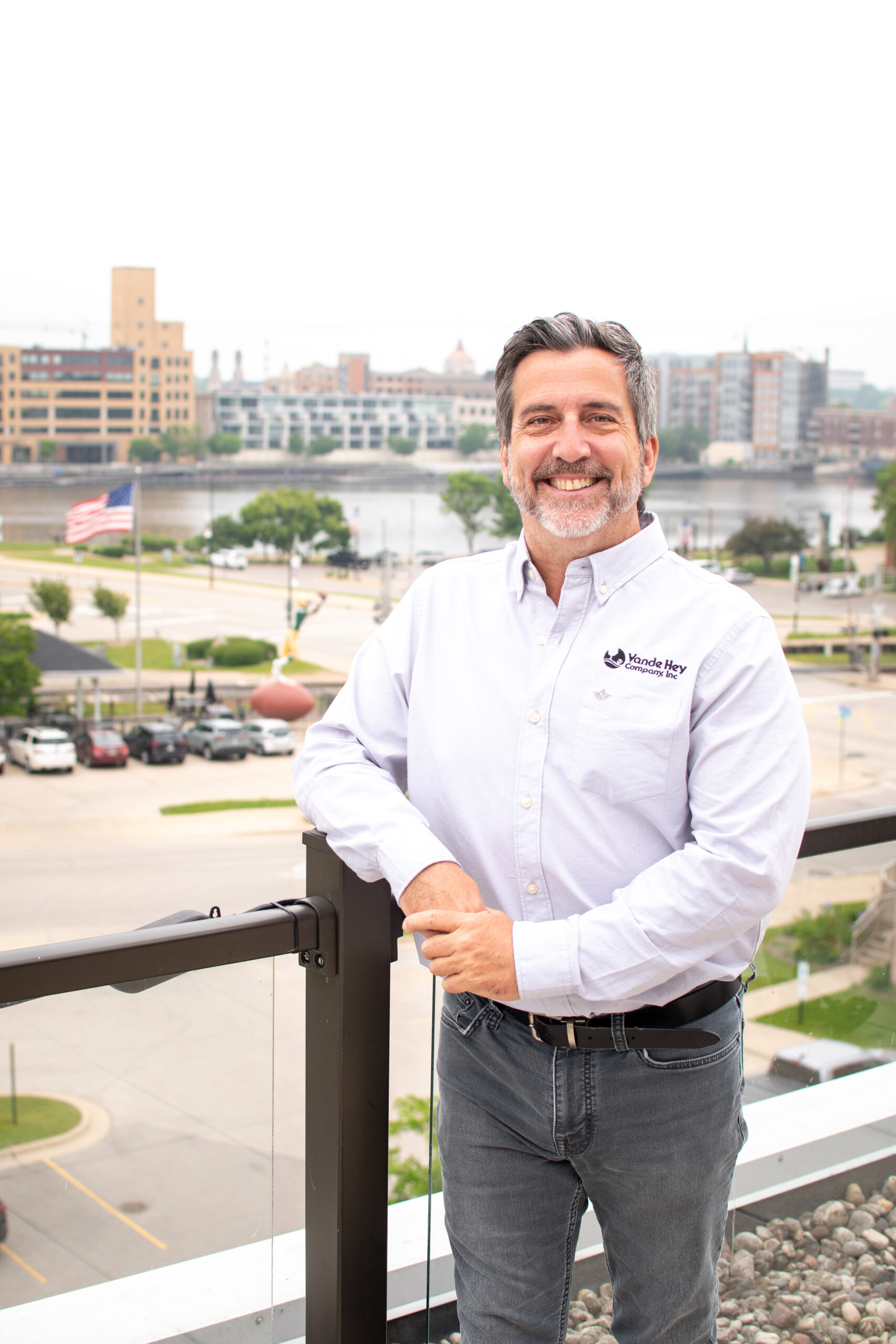
Paul Evansen became a Chamber Ambassador in 2024. A commercial landscape sales consultant at Vande Hey Company, Inc., he hoped the opportunity would help him expand his personal and professional network in Greater Green Bay.

Paul describes his role as a liaison between local businesses and the community that supports them as “very rewarding.” He believes it’s important for business owners to know they are not alone: “Going into business at any size or level can be daunting. The Greater Green Bay Chamber works to help them know they are not on an island but have a team behind them, supporting them and cheering for them.”

Some of his favorite moments as a Chamber Ambassador come from conversations with business owners who are unaware of the resources available through the Greater Green Bay Chamber. He especially enjoys hearing, “I had no idea the Chamber offered that,” after sharing more information. Paul has also valued the time spent with his fellow Chamber Ambassadors: “Personally, [my favorite memory] was laughing while competing with my fellow Ambassadors on a golf simulator at our 2024 [Chamber Ambassador] Bash.”

What would Paul tell those interested in becoming a Chamber Ambassador? “Make the time to do it ‘right,’ and you will gain friends, insight and the personal satisfaction that comes with serving others in your community.”

Greater Green Bay Chamber, NWTC Launch “LEading Greater” Leadership Development Program for Young Professionals

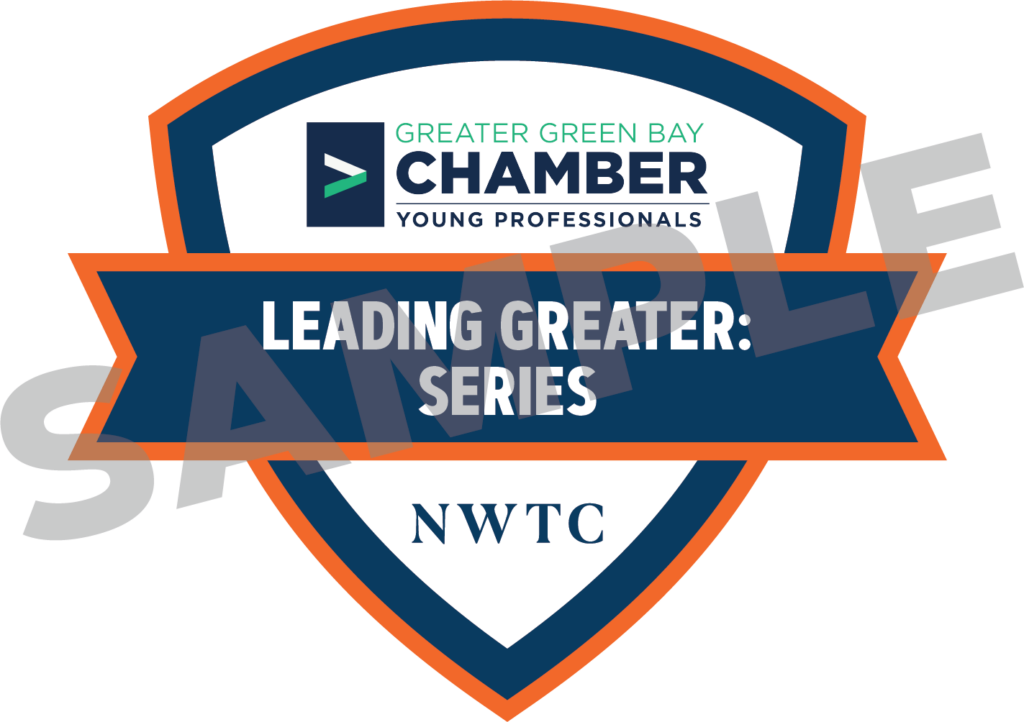
The Greater Green Bay Chamber, in partnership with Northeast Wisconsin Technical College (NWTC) Corporate Training & Economic Development, has launched “Leading Greater” — new leadership development program designed for Chamber Young Professional members. 

“Leading Greater” equips professionals at any stage of their career with practical, workplace-ready skills they can apply from day one. Participants build a deeper understanding of their leadership style while strengthening communication and teamwork—gaining the confidence to lead in today’s workplace. Whether stepping into a first leadership role or expanding existing strengths, learners gain the tools and perspective to grow — professionally and personally. 

“This is an opportunity for employers to invest in their people and develop leaders from within,” said Ashlee Vysocil, Young Professionals Manager at the Greater Green Bay Chamber. “And for individuals, it’s a chance to build practical skills and prepare for greater possibilities — wherever their career takes them.” 

Leading Greater is structured as a two-course learning experience, with the flexibility for learners to enroll in one or both courses, which include:  

  • Leading Greater: DiSC® — an in-person experience at NWTC that combines a DiSC® assessment with facilitated learning focused on communication styles and team dynamics. 
  • Leading Greater: I.M.P.A.C.T. — a flexible, self-paced course featuring virtual discussions and practical leadership development that participants can apply directly in their current roles. Upon completion, learners will earn an NWTC digital badge, with an option to bridge into college credit. 

“NWTC is proud to partner with the Greater Green Bay Chamber to strengthen leadership development opportunities for young professionals across our region,” said Jim Draeger, dean of NWTC Corporate Training & Economic Development. “Leading Greater reflects a shared investment in developing the region’s future leaders while supporting talent retention and business growth.” 

Leading Greater provides organizations with a meaningful way to invest in their young professionals while giving participants access to the development opportunities they seek—right here in Northeast Wisconsin. As leadership demands continue to evolve, this collaborative program positions the region for long-term success by strengthening talent, supporting employers, and building a pipeline of confident, capable leaders. 

To learn more about Leading Greater, including upcoming sessions and registration information, https://www.greatergbc.org/leading-greater-series/. 

### 

About Greater Green Bay Chamber 
The Greater Green Bay Chamber is greater for you. Since 1882, we have supported member businesses through economic development, workforce growth and community leadership that drives real impact. Discover how we can support you at greatergbc.org or call 920-593-3400. 


About NWTC Corporate Training & Economic Development 
Northeast Wisconsin Technical College’s Corporate Training & Economic Development (CTED) partners with employers across NWTC’s nine-county district to provide customized workforce training, professional development, and consulting services. Serving more than 7,200 individuals from over 700 organizations—including businesses, nonprofits, school districts, and government agencies—CTED helps organizations strengthen their workforce and respond to evolving industry needs. Learn more at www.nwtc.edu/workforce. 

Dan Lightfuss Named Vice President of Finance and Administration at the Greater Green bay Chamber

The Greater Green Bay Chamber is pleased to announce the addition of Dan Lightfuss as Vice President of Finance and Administration. In this key leadership role, Lightfuss will provide strategic oversight of the Chamber’s financial management, administrative operations, and organizational infrastructure, helping to guide long-term growth and ensure alignment with the Chamber’s mission and strategic priorities.

“Dan’s experience and perspective will be a strong asset to our leadership team,” said Lara Fritts, President and CEO of the Greater Green Bay Chamber. “He understands how to align financial stewardship with organizational strategy, and his leadership will support the Chamber’s continued growth and impact.”

As Vice President of Finance and Administration, Lightfuss will partner closely with the President and CEO, Executive Committee, and Board of Directors to shape financial strategy, lead budgeting and forecasting, and provide insight into opportunities for sustainable growth. He will also oversee key administrative functions, including accounting, human resources, information technology, and facilities, ensuring that systems and processes effectively support the Chamber’s operations and long-term impact.

Lightfuss brings more than 30 years of experience in accounting and financial leadership, with a background spanning public accounting, nonprofit organizations, and compliance-focused environments. Most recently, he served as Chief Financial Officer at Riverview Gardens, where he led financial operations, budgeting, reporting, and audit processes while working closely with executive leadership and boards. Throughout his career, Lightfuss has been recognized as a disciplined and highly committed leader, consistently going above and beyond to ensure accuracy, accountability, and strong outcomes. He is equally known for his ability to mentor and develop others, working alongside colleagues to build knowledge, strengthen capabilities, and support team success. His background includes audit leadership, regulatory compliance, financial consulting, and performance reporting across a wide range of industries.

I am honored to join the Greater Green Bay Chamber and to be part of an organization that plays such an important role in supporting businesses and the broader community,” said Lightfuss. “I look forward to contributing to the Chamber’s continued success and working alongside a team committed to meaningful impact.

Lightfuss holds a Bachelor of Science in Accounting from the University of Wisconsin–La Crosse and is a Certified Public Accountant in the state of Wisconsin. He has also demonstrated a strong commitment to community service, having served on multiple board and finance leadership roles.

Oneida Nation’s Economic Impact Reaches $1.09 Billion in Wisconsin

Chamber members gained a deeper understanding of a key regional economic driver at the April Greater Green Bay Chamber Economic Development Board meeting, where a new independent study from fellow members St. Norbert College and the Oneida Nation was presented.

The study highlights the scale and reach of the Oneida Nation’s economic footprint, estimating $1.09 billion in total economic activity in Wisconsin by 2025, along with more than $94 million in taxes paid to non-tribal governments.

For members, those numbers reflect more than just economic output. They represent real activity flowing through local businesses, jobs that support families and communities, and partnerships that strengthen the broader regional economy.

Oneida

The report breaks down that $1.09 billion into several layers. Approximately $653 million comes from direct economic activity, including spending on salaries, goods and services. That investment alone supports 3,266 jobs. From there, the impact continues to ripple outward through indirect and induced effects, as employees spend wages locally, suppliers scale to meet demand and businesses grow alongside that activity.

While gaming remains an important component, the study underscores that it is only part of a much broader and increasingly diversified economic portfolio. About one-third of Oneida Nation’s total economic activity is tied to gaming, supporting roughly 1,500 jobs. The remainder spans a wide range of enterprises, including financial services, hospitality operations such as hotels, retail fuel and convenience stores, agricultural and agritourism ventures, and commercial leasing partnerships with businesses ranging from grocery stores to retail tenants.

That diversification is meaningful for Chamber members, as it reflects expanding opportunities for collaboration, supply chain partnerships and shared growth across industries.

The study also points to significant growth over time. Since the last analysis in 2018, Oneida Nation’s economic impact has increased by approximately $249 million. That growth is driven by expansion across business lines and continued reinvestment in infrastructure and services.

The findings are further grounded in a broader historical context. Prior to the rise of tribal gaming in the 1990s, the Oneida Nation, like many Indigenous communities, faced limited economic opportunity, with many members relying on low-wage, seasonal work. Today’s impact reflects decades of strategic development and investment.

A key part of that strategy is reinvestment. Revenue generated by Oneida Nation is directed back into healthcare, education, public safety, infrastructure and land reacquisition efforts to support not only economic development, but long-term community stability and growth.

Taken together, the study presents a picture of an economy that is not only substantial in size but deeply connected to the region’s overall economic health. The $1.09 billion impact represents an evolving network of businesses, jobs and investments that continue to create value across Northeast Wisconsin.

Contact

300 N. Broadway Suite 3A

Green Bay, WI 54303

(920) 593 - 3400

Hours

Mon - Thurs: 8:00am - 4:30pm

Friday: 8:00am - 3pm

Quick Links

Membership

Events

Chamber Young Professionals

Economic Development

Follow Us